

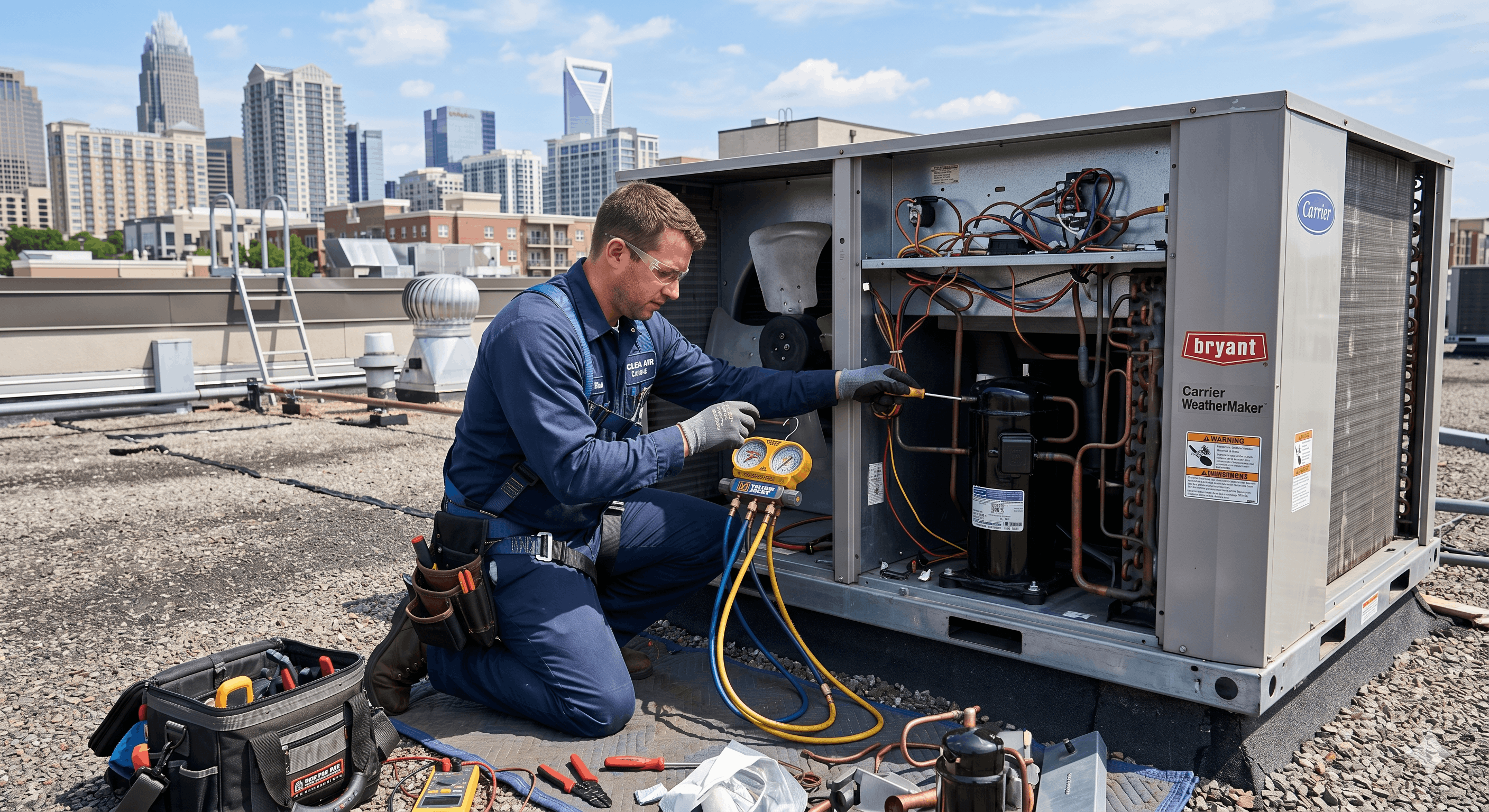
Understanding HVAC Emergency Situations
Not every heating and cooling issue requires emergency service, but some problems should be addressed immediately to protect comfort and safety.
Complete System Failure During Extreme Temperatures
If your HVAC system stops working during severe heat or cold, emergency repair may be necessary.
Burning Smells or Electrical Issues
Electrical odors, smoke, or sparking should never be ignored.
Refrigerant Leaks
Refrigerant issues can affect both system performance and safety.
Frozen HVAC Systems
Ice buildup often signals airflow or refrigerant problems that require professional diagnosis.
Water Leaks Around HVAC Equipment
Excess moisture can damage surrounding areas and contribute to mold growth.
When to Call a Professional
If your system suddenly stops functioning or shows signs of electrical or safety issues, professional HVAC service should be scheduled immediately.
River Valley Heating & Home Comfort provides dependable emergency HVAC repair services for homeowners throughout the Little Rock area.
Understanding What Counts as an HVAC Emergency
When it comes to home comfort, your HVAC system plays a crucial role. However, there are times when issues arise that can be classified as an HVAC emergency. Recognizing these situations can help you act quickly and ensure your home remains comfortable and safe.
An HVAC emergency typically involves a complete system failure, which can leave your home without heating or cooling. For instance, if your air conditioning unit stops working during a heatwave, it can lead to dangerous living conditions, especially for vulnerable individuals such as the elderly or young children. Similarly, a heating failure in the dead of winter can pose serious health risks due to extreme cold.
Another scenario that qualifies as an HVAC emergency is the presence of unusual noises or smells coming from your system. If you hear loud banging, hissing, or grinding sounds, it may indicate a mechanical failure that requires immediate attention. Additionally, strange odors, particularly the smell of gas or burning, should never be ignored, as they can signal a potentially hazardous situation.
Leaks are also a significant concern when it comes to HVAC emergencies. If you notice water pooling around your furnace or air conditioning unit, it could indicate a refrigerant leak or a malfunctioning condensate drain. These issues not only affect the efficiency of your system but can also lead to water damage and mold growth in your home.
In some cases, an HVAC emergency may not be immediately apparent. For example, if your system is running continuously without reaching the desired temperature, it may be struggling to function properly. This can lead to increased energy bills and unnecessary wear and tear on your equipment.
In conclusion, understanding what counts as an HVAC emergency is essential for maintaining a safe and comfortable home. If you encounter any of the situations mentioned above, it’s crucial to contact a professional HVAC technician immediately. Timely intervention can prevent further damage and ensure your system operates efficiently, keeping your home comfortable year-round.